
China’s Consumption Problem: When the Car Market Stalls, the Whole Economy Feels It
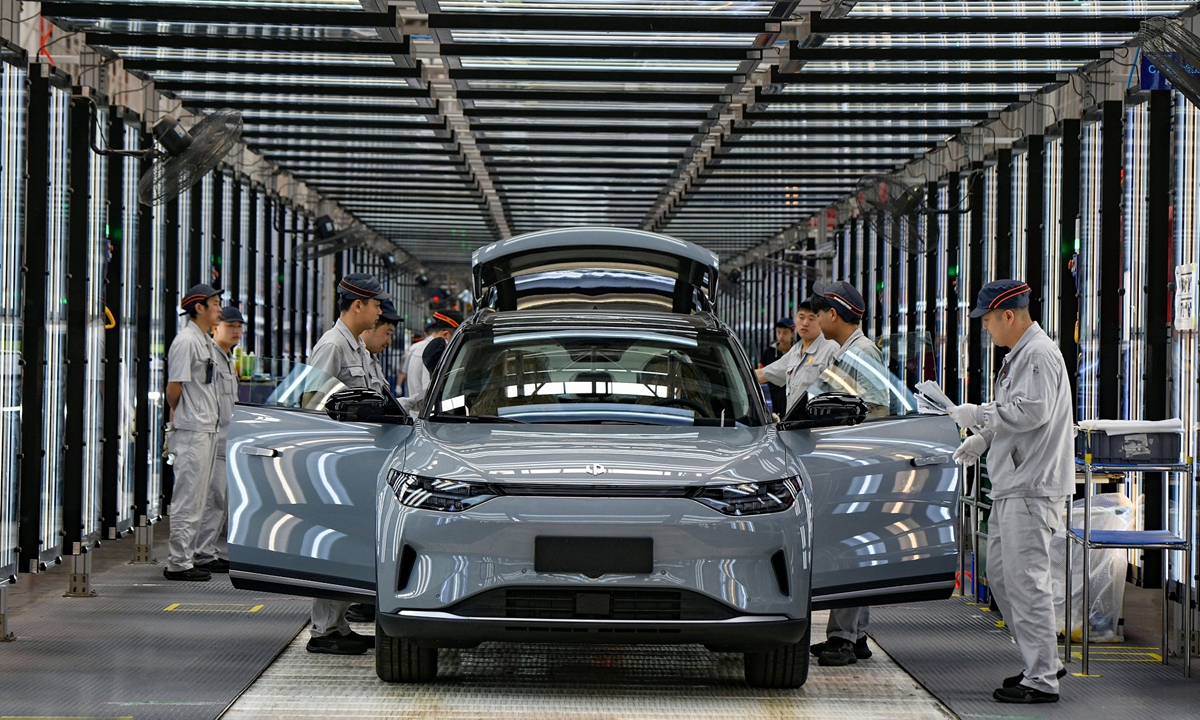
China’s retail sector delivered a sobering signal in May, with sales declining 0.6% year-on-year — worse than expected, and the first contraction since the country emerged from COVID lockdowns. The headline figure, however, masks a more specific culprit: a 16% collapse in car sales, a category that accounts for roughly 8% of China’s CPI basket. Home appliances, construction materials and decoration goods also contracted at double-digit rates, painting a picture of a consumer that is pulling back across the board on big-ticket discretionary spending.
What’s Driving the Weakness
The data does not exist in a vacuum. Ongoing conflict in the Middle East has pushed energy prices higher, squeezing household purchasing power at a time when domestic confidence is already fragile. Property prices — both new and used — continue to decline month-on-month at a national level, eroding the wealth effect that has historically underpinned Chinese consumer spending. For many urban households, real estate remains the primary store of savings, and its continued slide is difficult to offset through policy stimulus alone.
Where the Bright Spots Are
Not all the data was negative. The services production index rose 4.4% year-on-year, offering some reassurance — services tend to carry a higher correlation with GDP growth and represent an increasingly important pillar of China’s economic rebalancing.
The more striking outperformance came from Tier 1 cities and the technology sector. Investment in high-tech industries rose 4.5% year-on-year in these urban centres, with capital expenditure on semiconductor manufacturers up 11% and lithium battery makers surging 25%. High-tech manufacturing overall rose 15% year-on-year, while electronics industry output jumped 17%. Semiconductors alone accounted for roughly half of growth in both exports and imports, with semiconductor exports rising a remarkable 111% year-on-year.
The Question of Broadening
The concentration of AI-driven activity within Tier 1 cities raises a structural question that markets are increasingly focused on: will this outperformance eventually broaden across Tier 2 and Tier 3 cities, as it has in previous cycles? The historical precedent exists, but the current cycle is unusual. The dominance of AI and semiconductors — industries that are inherently concentrated in a small number of urban centres with deep talent pools and infrastructure — makes a natural diffusion effect harder to assume than in previous technology-led cycles.
Why This Matters for Investors
China’s bifurcated economy — weak consumer demand on one side, technology-sector strength on the other — presents a more complex investment picture than the headline retail miss alone suggests. The challenge for policymakers is that the tools most effective at stimulating consumption (property support, fiscal transfers, wage growth) are largely disconnected from the AI and semiconductor boom driving the strongest growth numbers. For investors with exposure to China or broader Asian markets, the divergence between old-economy weakness and new-economy strength is likely to remain a defining feature of the investment landscape in the months ahead.
At NEBA Financial Solutions, we continue to monitor structural developments across Asian markets and assess how evolving economic conditions may shape investment opportunities for advisers and their clients.
If you would like to discuss how developments like these may affect your portfolio positioning, our team is here to help.
📩 Get in touch: info@nebafinancialsolutions.com
This article is based on insights and analysis provided by TEAM.
