
The Trillion-Dollar Listings: What the SpaceX IPO Means for Advisers
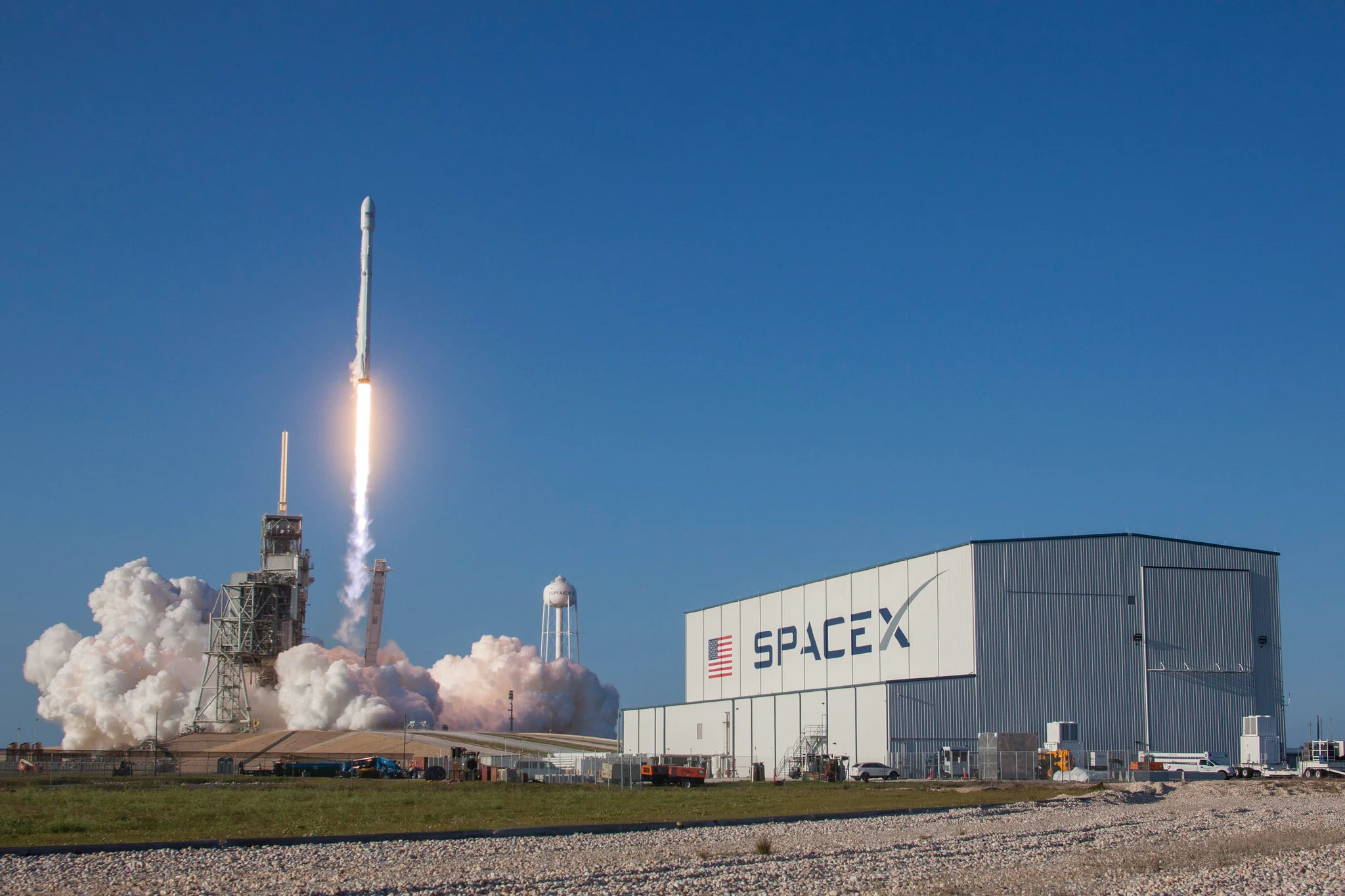
SpaceX’s public listing on 12 June 2026 was, by almost any measure, the largest IPO in history. Priced at $135 a share, the offering raised around $75 billion and valued the company at roughly $1.77 trillion — a figure that swelled to over $2 trillion by the close of its first day of trading, briefly making it more valuable than Tesla and pushing Elon Musk past the milestone of becoming the world’s first dollar trillionaire.
For advisers fielding client questions about SpaceX, and about the wave of mega-cap technology listings expected to follow it, the story is less about the headline number and more about what sits underneath it.
A three-engine business, one profitable so far
SpaceX’s public pitch rests on three segments: its long-established launch business, its Starlink satellite connectivity network, and — following the February 2026 acquisition of xAI — a fast-growing artificial intelligence division. Of the three, only Starlink is currently profitable, generating quarterly revenue of over $3 billion and continuing to add subscribers. The launch and AI segments remain heavily capital-intensive, and the company reported a net loss of close to $5 billion in 2025, driven largely by AI infrastructure spending.
That combination — one reliable cash generator supporting two ambitious, unprofitable growth bets — is a familiar pattern for advisers who have navigated previous waves of high-growth technology listings. It’s also why analyst views on the stock have been unusually divided: some houses have initiated coverage with “sell” ratings and price targets well below the IPO price, citing the scale of capital intensity and elevated valuation multiples, while others argue the business needs to be judged over a 20-year horizon rather than the usual quarterly lens.
Concentrated control is part of the structure, not a footnote
As with a number of founder-led technology companies, SpaceX listed with a dual-class share structure. Musk retains a large majority of the voting power through Class B shares, even though his economic ownership of the company is a smaller share of the total. For investors, this means governance decisions will remain firmly in the founder’s hands for the foreseeable future, regardless of how public share ownership evolves. It’s a structural feature worth understanding clearly before sizing any position, rather than a detail to be assumed away by strong first-day trading.
Why the index story matters as much as the fundamentals
A significant part of the early trading dynamic has had little to do with the underlying business at all. SpaceX secured early inclusion in the Nasdaq-100 — arriving within days of listing rather than the usual multi-month waiting period — while S&P has held off, since the stock doesn’t yet meet its profitability and free-float requirements for the S&P 500. Because index inclusion forces tracker and passive funds to buy shares regardless of view on valuation, it has added a genuine, if temporary, source of demand independent of the company’s fundamentals. That’s a useful reminder for clients: strong early share-price performance in a newly listed mega-cap doesn’t always reflect a market verdict on the business — sometimes it reflects the mechanics of index construction.
Part of a broader pattern, not a one-off
SpaceX is unlikely to be the last trillion-dollar-scale listing this year. Anthropic and OpenAI have both been reported to be preparing for public listings of a similar scale, each carrying potential valuations in the region of $1 trillion. If all three come to market in a similar window, the weighting of AI and technology names within major global indices will shift further — with knock-on implications for how diversified any index-tracking allocation really is.
The takeaway for portfolios
None of this is a reason to avoid the theme — AI and space-based infrastructure are genuine, multi-decade growth areas, and being entirely absent from them carries its own risk. But it is a reason for discipline. Newly listed, capital-hungry businesses with concentrated founder control and stretched valuations behave differently to the cash-generative incumbents that have driven index returns over the past several years. Understanding which type of exposure a client already holds — and how much more concentrated exposure a new listing like this would add — matters more than the headline valuation number ever will.
At NEBA Financial Solutions, our structured and multi-asset solutions are built with exactly this kind of scenario in mind: giving advisers a way to access high-growth themes like AI while keeping risk management, diversification and defined outcomes at the centre of the conversation.
